
BridgeSwitch™ combines high efficiency, design flexibility, enhanced safety, IEC 60335-1 and IEC 60730-1 compliance, with fault diagnosis
By Cristian Ionescu-Catrina, Senior Marketing Manager, Power Integrations
Designers are increasingly challenged by demands for continuous improvements in the efficiency and reliability of motor drives in consumer appliances. From the European Union (EU) to China, higher efficiencies are required for a growing range of consumer appliances including dishwashers, refrigerators, and heating, ventilation and air conditioning (HVAC) systems.(references?) Designs are also expected to comply with IEC 60335-1 IEC 60730-1 safety requirements.
At the same time, consumers and manufacturers alike are demanding higher levels of reliability with less field service and fewer returns. According to a recent industry study, misdiagnosis results in 30% of compressor returns having ‘no-fault found,’(1) adding to costs and inefficiencies across the supply chain, and resulting in unhappy consumers. Harnessing the IoT can enable remote monitoring of consumer appliances, but the design must support meaningful and cost-effective fault diagnostics and protection functions.
To address these challenges, designers can turn to BridgeSwitch, high-voltage, self-powered, half-bridge motor driver ICs with integrated device protection, and system monitoring and reporting, that deliver higher efficiency, increased design flexibility and enhanced inverter and system reliability (Figure 1).
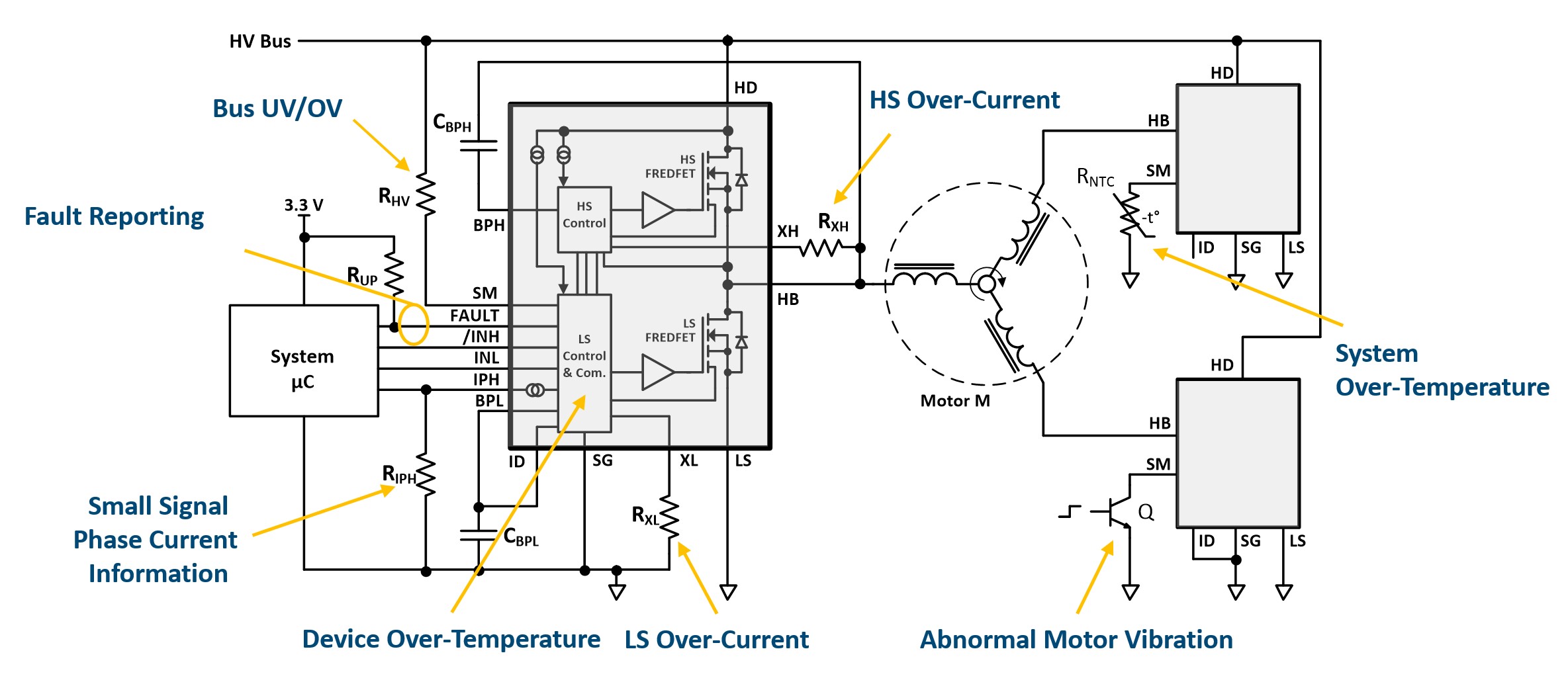
Figure 1: BridgeSwitch combines high efficiency with extensive fault monitoring and reporting (blue text) for increased system and inverter reliability.
High efficiency simplifies thermal management
BridgeSwitch integrated half-bridges simplify the development and production of high-voltage inverter driven 1- or 3-phase permanent magnet (PM) or brushless dc (BLDC) motor drives. BridgeSwitch includes a proprietary instantaneous phase current output signal that facilitates the design of sensor-less control schemes. These ICs include two 600V, N-channel power FREDFETs, with high- and low-side drivers, in a small-outline surface mount package (13.6 x 9.4 mm and 1.35 mm high) that offers extended creepage distances and allows heat sinking of both power FREDFETs through the printed circuit board (Figure 2).
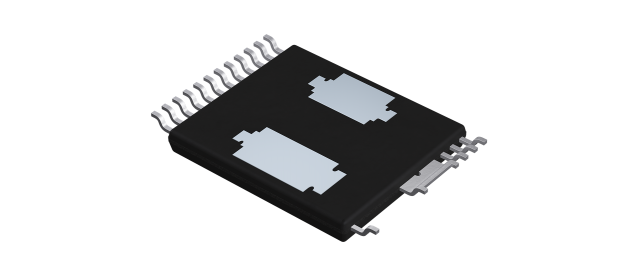
Figure 2: This bottom view of the BridgeSwitch InSOP-24C package shows the extended creepage distance (lower right) and the cooling pads for the high- and low-side FREDFETs.
The ultra-soft and ultrafast diodes in the FREDFETs are optimized for hard switched inverter drives. The high- and low-side control and drivers are self-supplied, eliminating the need for an external auxiliary power supply. And the distributed thermal footprint, combined with up to 99.2% efficiency, eliminates the need for an external heat sink at rated continuous RMS current, reducing system cost, size, and weight. BridgeSwitch ICs can deliver up to 400 W of output power and are well-suited for use in inverters in appliances such as dishwashers and refrigerators, and condenser fans in high efficiency air conditioners.
Hardware-based fault protection saves certification cost and time
The microcontroller (MCU) in most inverter designs is used to monitor and respond to fault conditions, as well as controlling the motor. Motor control is straight forward and relatively quick to implement using standard software packages. Fault diagnostics and protection are more challenging and can vary significantly from one application to another since they rely on a variety of different sensors to monitor the phase currents, system overtemperature conditions, vibration, and other system parameters. It’s complex to program the MCU to interpret the sensor inputs and implement protection as required to gain certification to international standards.
Certifying the monitoring and control software is a time consuming and costly process, often delaying time to market. On the other hand, the hardware-based motor fault protection in BridgeSwitch ICs is confirmed to be compliant to the abnormal motor operation requirements of IEC 60335-1 and IEC 60730-1 without relying on software to control, reducing costs and speeding time to market.(2) Its Class A software designation per IEC 60730-1 can save two months of certification time, and the use of BridgeSwitch ICs also simplifies the safety approval process for product updates.
BridgeSwitch combines comprehensive internal fault protection functions with external system level monitoring and reporting via a bidirectional FAULT bus (Figure 3). Internal fault protection includes two-level thermal overload protection and cycle-by-cycle current for both FREDFETs. System level monitoring includes four undervoltage levels and one overvoltage level on the high-voltage (HV) DC bus, and external sensors such as a negative coefficient thermistor (NTC) temperature sensor, a vibration sensor and the ability to detect a stalled motor, disconnected motor-phase, or running over load.
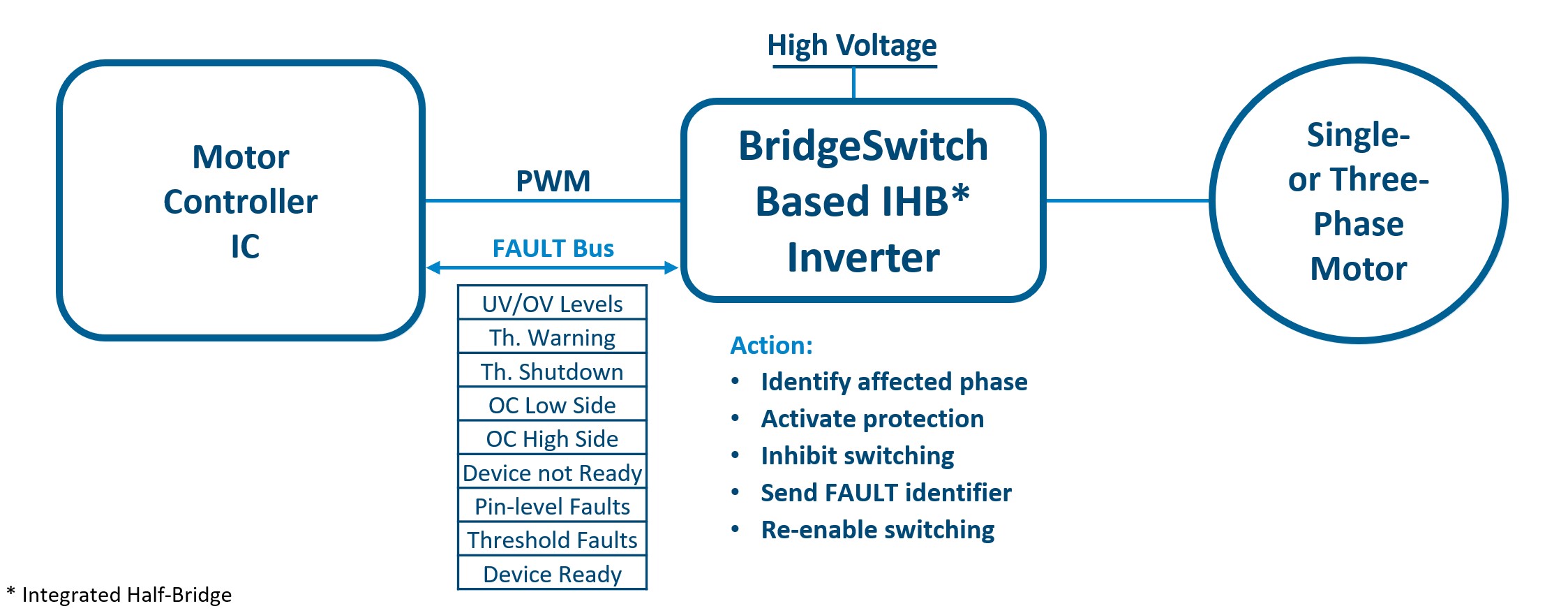
Figure 3: BridgeSwitch ICs have integrated fault diagnosis, a bidirectional FAULT bus, plus reporting and hardware protection to enhance reliability.
The single-wire FAULT bus is based on an open-drain architecture and enables the BridgeSwitch ICs to send status updates using an 8-bit word, with the 8th bit providing odd-parity to ensure signal integrity. It is also used by the MCU to send:
- Commands to the BridgeSwitch ICs;
- Queries to the BridgeSwitch ICs for status updates, and;
- Reset commands to ICs that are latched-off for an over-temperature fault.
The ID pin is used at power up to set a unique IHB identification for each BridgeSwitch IC, enabling the MCU to identify which IC provided a given fault alert; IHB1 has the ID pin connected to BPL, the ID pin is floating for IHB2 and the ID pin is connected to SG for IHB3 (Figure 4). In addition, setting the IHB identification of each IC supports arbitration on the single-wire bus using the device ID time period (tID). HB1 has a tID of 40 µs, the tID for HB2 is 60 µs and the tID for HB3 is 80 µs. The system MCU is assigned a default tID of 160 µs, guaranteeing that it always wins bus arbitration.
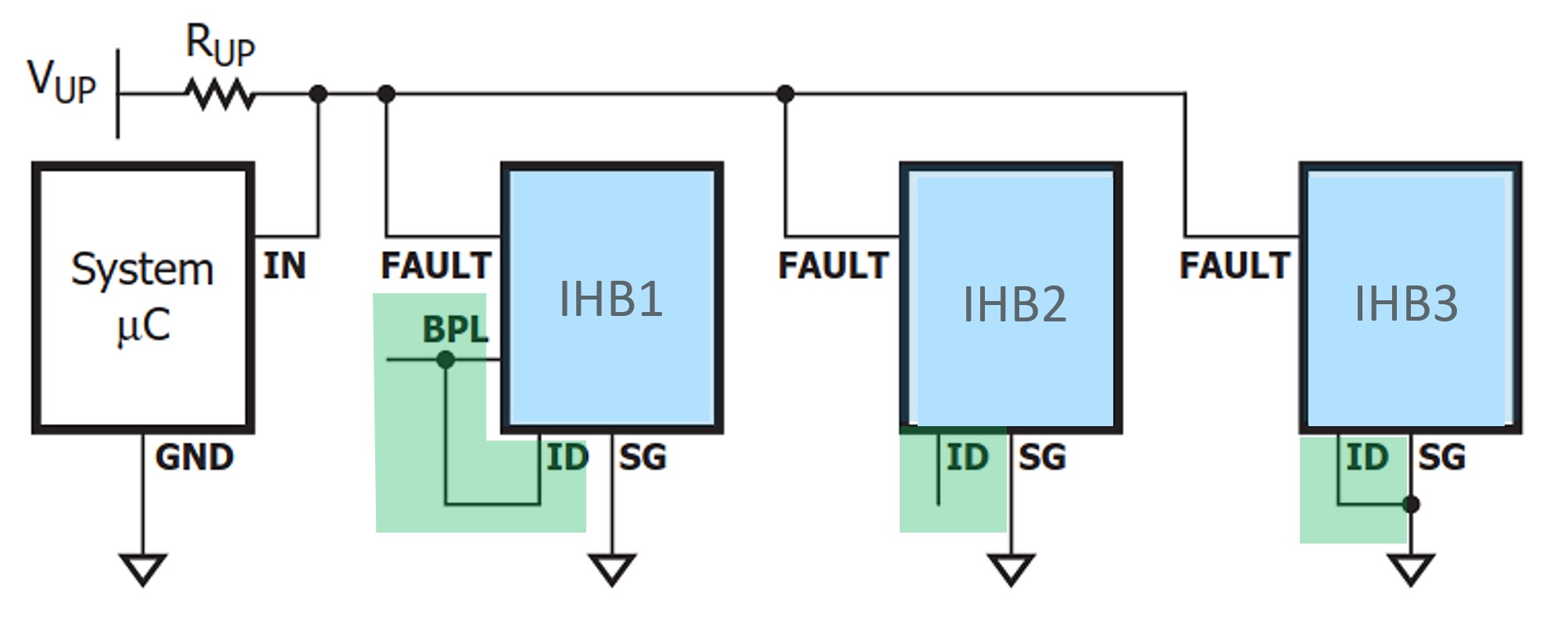
Figure 4: BridgeSwitch status reporting combines single wire fault communication bus with device ID programming (green).
MotorExpert accelerates time to market
MotorExpert software features speed and current control loop functions and includes an embedded C code application, library, and control GUI that supports single-phase designs using BridgeSwitch ICs.(3) It accelerates time to market by providing a graphical interface to all parameters and commands, as well as a terminal emulator for interacting with the motor controller in serial mode. The Motion Scope window displays real-time linear graphs of controller variables. New functions and use cases can be added and users can easily port the software to an MCU. The software needs only 14 kB of code memory and 5 kB of SRAM, making it suitable for running on MCUs with limited memory resources. Software developed using MotorExpert meets static (MISRA) and dynamic performance requirements for latency, jitter and execution time.
Conclusion
Designers can turn to BridgeSwitch ICs with built-in system fault diagnosis to reduce field returns and speed time to market. These self-powered, half-bridge motor driver ICs deliver the high efficiency, design flexibility, and enhanced inverter and system reliability demanded in modern consumer appliances. The extensive hardware-based protection functions save certification time and costs. These ICs are IEC 60335-1 & 60730-1 compilate as confirmed in UL Report 4788685352. The ID pin enables the MCU to pinpoint the location of faults. Finally, the use of MotorExpert design software further speeds time to market for single-phase applications of BridgeSwitch ICs.
References
1: Understanding Compressor Electronics, Emerson Climate; Chapter 2, Page 3
2: UL Report 4788685352, UL Informative Report IEC 60335-1 Safety of Household and Similar Electrical Appliances
3: BridgeSwitch Motor-Expert Motor Control Configuration and Diagnostics Tool, Power Integrations
